

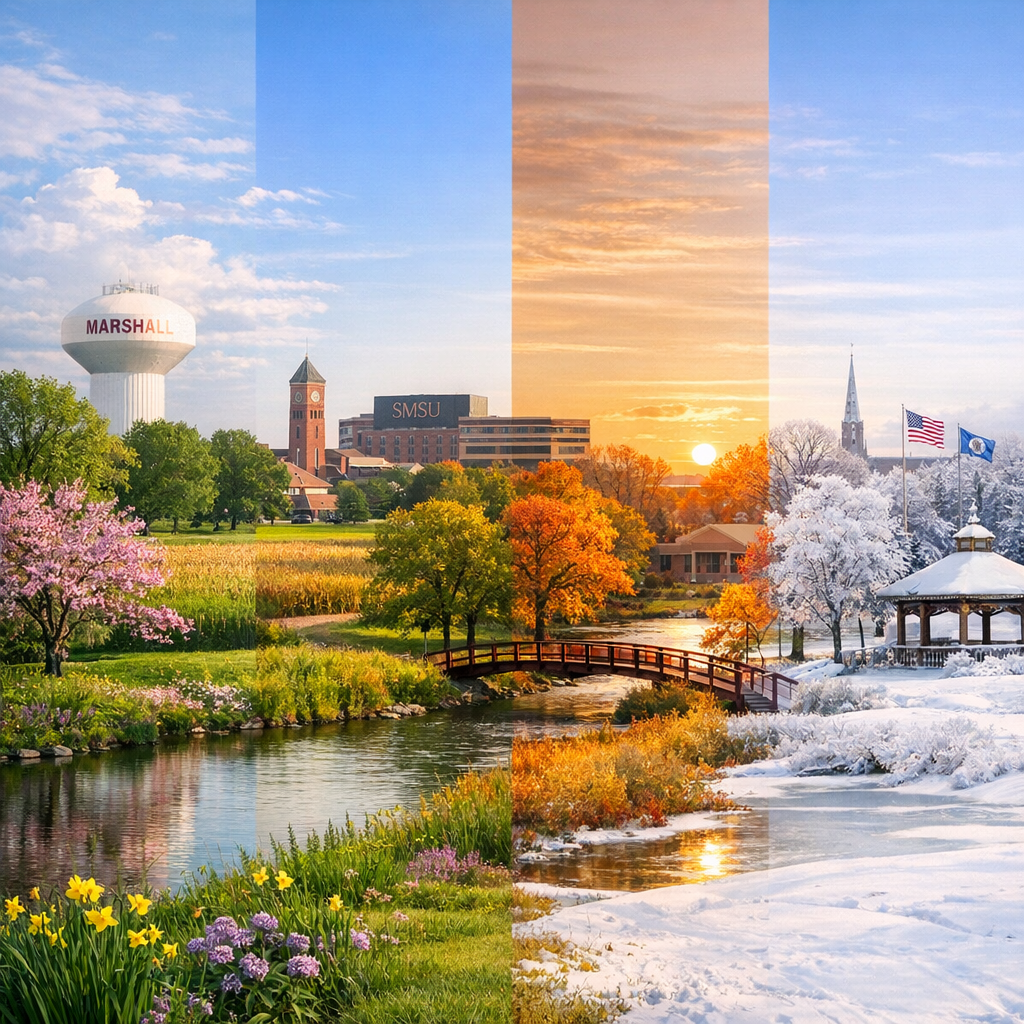
Marshall, Minnesota, experiences a diverse range of weather conditions throughout the year, characteristic of the Upper Midwest’s continental climate. Understanding these patterns is essential for residents and visitors alike.
Seasonal Weather Patterns
Winter
Winters in Marshall are notably cold and snowy. Average high temperatures in January hover around 23°F, with lows dipping to approximately 4°F. Snowfall is common, contributing to the season’s frosty landscape.
Spring
Spring brings a gradual warming trend. By April, average highs reach about 55°F, with lows around 34°F. This season also sees increased precipitation, averaging 2.71 inches, as the region transitions from winter’s chill to summer’s warmth.
Summer
Summers are warm and humid. July typically records average highs of 83°F and lows near 63°F. Thunderstorms are frequent during this period, providing much-needed rainfall to the area.
Autumn
Autumn features cooling temperatures and decreasing precipitation. October averages highs of 59°F and lows of 37°F, accompanied by vibrant fall foliage that attracts many to the region.
Environmental Considerations
Flooding
Marshall has faced challenges with flooding, particularly during spring thaws and heavy summer rains. In July 2025, the city declared a state of emergency after receiving five to eight inches of rain within a two-hour span, overwhelming storm and sewer infrastructure.
Water Quality
Water quality is a significant concern. Elevated chloride levels, primarily from road salt and water softeners, have been detected in local water bodies. The Minnesota Pollution Control Agency has implemented programs to reduce salt usage and mitigate its environmental impact.
Conclusion
Marshall’s climate offers a full spectrum of seasonal experiences, each with its own set of environmental considerations. Staying informed about these patterns and challenges enables the community to better prepare and adapt to the ever-changing weather landscape.