

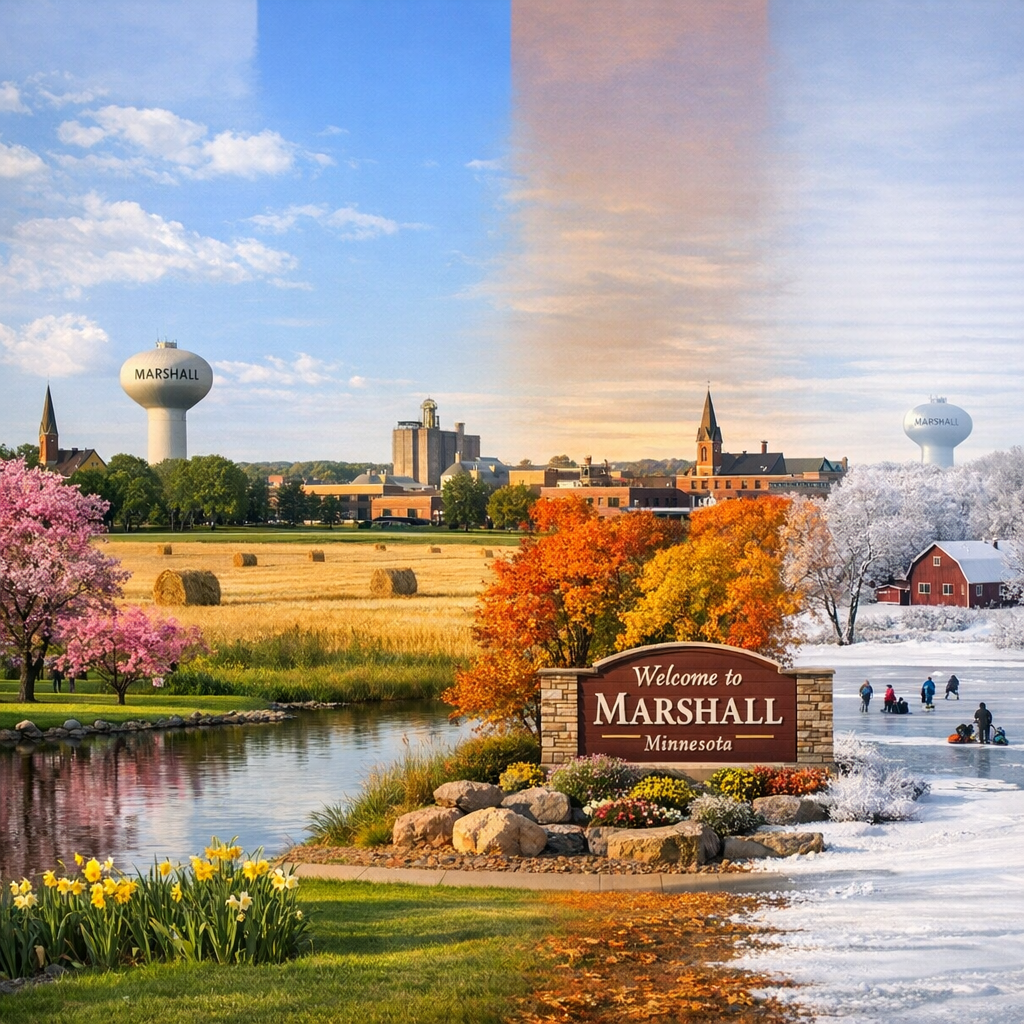
Marshall, Minnesota, experiences a diverse range of weather conditions throughout the year, characteristic of a humid continental climate. Understanding these patterns is essential for residents and visitors alike.
Seasonal Weather Patterns
Winter (December – February)
Winters in Marshall are cold and snowy. Average high temperatures range from 23°F in January to 28°F in February, with lows often dipping into the single digits. Snowfall is common, contributing to the region’s winter landscape.
Spring (March – May)
Spring brings a gradual warming trend. March sees average highs around 40°F, increasing to 68°F by May. This season also marks an uptick in precipitation, with May averaging 3.61 inches of rainfall.
Summer (June – August)
Summers are warm and humid. July is typically the warmest month, with average highs reaching 83°F. Thunderstorms are frequent during this period, contributing to the season’s average rainfall of approximately 3.63 inches in July.
Autumn (September – November)
Autumn features cooling temperatures and decreasing precipitation. September averages highs of 74°F, which drop to 42°F by November. The season is also known for its vibrant fall foliage.
Environmental Considerations
Flooding
Marshall has experienced significant flooding events, notably in July 2025, when heavy rainfall overwhelmed the city’s storm and sewer infrastructure, leading to a state of emergency. Such events highlight the importance of effective flood management and infrastructure resilience.
Water Quality
Water quality is a critical concern. The city has implemented initiatives to reduce chloride pollution in the Redwood River, primarily caused by salt from water softeners. These efforts aim to protect aquatic life and maintain safe drinking water standards.
Climate Trends
Over the past century, Marshall has observed a slight increase in average annual temperature and precipitation. Additionally, the frequency and intensity of extreme weather events, such as heatwaves and heavy rainfall, have risen, aligning with broader climate change patterns.
Understanding Marshall’s climate and environmental challenges is vital for community preparedness and sustainable development. Staying informed enables residents to adapt to changing conditions and contribute to environmental stewardship.