

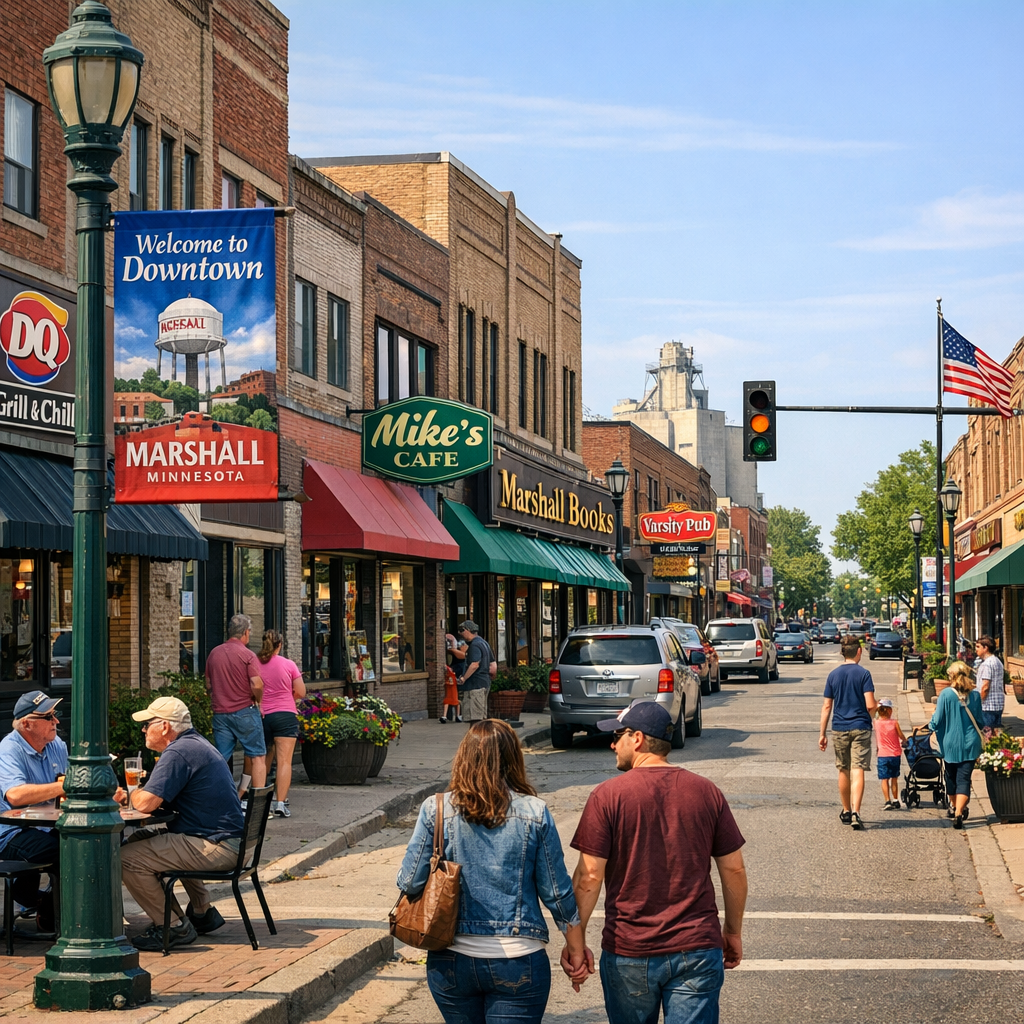
Marshall, Minnesota, serves as a vibrant economic hub in Lyon County, offering a dynamic blend of business opportunities, housing developments, and demographic diversity. This article provides an in-depth look at the city’s economic trends, housing market, and business environment.
Demographics and Economic Indicators
As of 2026, Marshall’s population is projected to reach 14,250, reflecting a steady annual growth rate of 0.56%. The median household income stands at $68,566, with approximately 16.87% of residents living below the poverty line. The city’s racial composition is predominantly White (78.2%), followed by Hispanic (6.5%) and Asian (6.2%) communities.
Housing Market Dynamics
The housing market in Marshall is notably competitive. Over the three months ending May 2026, the median sale price of homes was $229,862, with properties typically selling in about six days. Notably, 61.4% of homes sold above the listing price, indicating strong demand and limited inventory.
Business Environment and Economic Development
Marshall’s strategic position as a regional hub is underscored by its pull factor of 1.66, meaning the city attracts significantly more retail spending than its population would suggest. The daytime population swells to approximately 25,000, highlighting the city’s role as a commercial center.
Local businesses have been proactive in expanding their operations. For instance, Lockwood Motors and Bend Rite Fabrication have undertaken significant facility expansions, supported by tax abatements approved by the Marshall City Council. These developments not only enhance the local economy but also create new employment opportunities.
The Marshall Area Chamber of Commerce plays a pivotal role in fostering business growth. With over 580 members employing nearly 10,000 individuals in Lyon County, the Chamber offers networking opportunities, advocacy, and programs designed to support businesses at various stages of development.
Conclusion
Marshall’s economic landscape is characterized by steady population growth, a competitive housing market, and a thriving business environment. The city’s ability to attract a larger daytime population and its strategic initiatives to support local businesses position it as a key economic player in the region.