

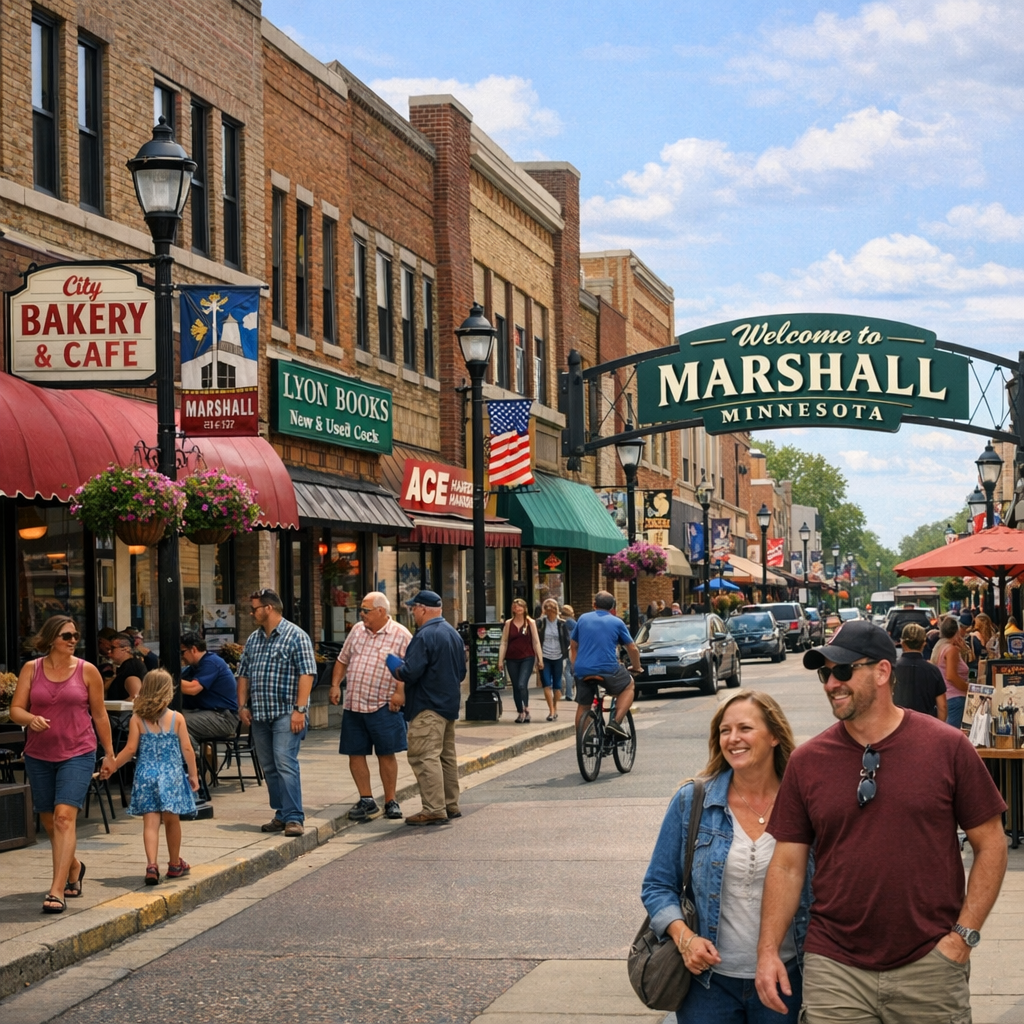
Marshall, Minnesota, serves as a regional hub with a dynamic economic landscape. This article provides an overview of the city’s economic trends, housing market, and recent business developments.
Economic Trends
As of 2026, Marshall’s population is approximately 14,069, reflecting a steady annual growth rate of 0.26%. The median household income stands at $68,566, with a poverty rate of 16.87%. The median age of residents is 35.9 years, indicating a relatively young workforce. These demographics contribute to a stable economic environment conducive to business growth.
Housing Market
The housing market in Marshall has experienced significant growth. In March 2026, the median sale price of homes reached $222,500, marking a 19.0% increase from the previous year. Homes typically sell after an average of 43 days on the market, indicating a competitive market. This upward trend in home values reflects the city’s economic vitality and attractiveness to potential residents.
Business Developments
Marshall’s business landscape has seen notable changes. In May 2025, the retail chain Marshalls opened a new store in the former Shopko location, drawing significant customer interest and contributing to the local economy. Conversely, in April 2025, Patzer’s Hardware Hank, a longstanding fixture since 1969, began liquidating its hardware, appliance, and furniture business after nearly six decades of operation. The owners cited plans to relocate closer to family as the primary reason for this decision.
Additionally, in 2025, Yelloh, formerly known as Schwan’s Home Delivery, announced the closure of its operations by the end of the year. The company cited changing customer lifestyles and economic challenges as factors leading to this decision. Despite these closures, Marshall continues to attract new businesses and maintain a robust economic environment.
Conclusion
Marshall’s economic landscape is characterized by steady population growth, a competitive housing market, and dynamic business developments. While the city has experienced both business openings and closures, the overall economic environment remains strong, positioning Marshall as a key regional hub in Minnesota.