

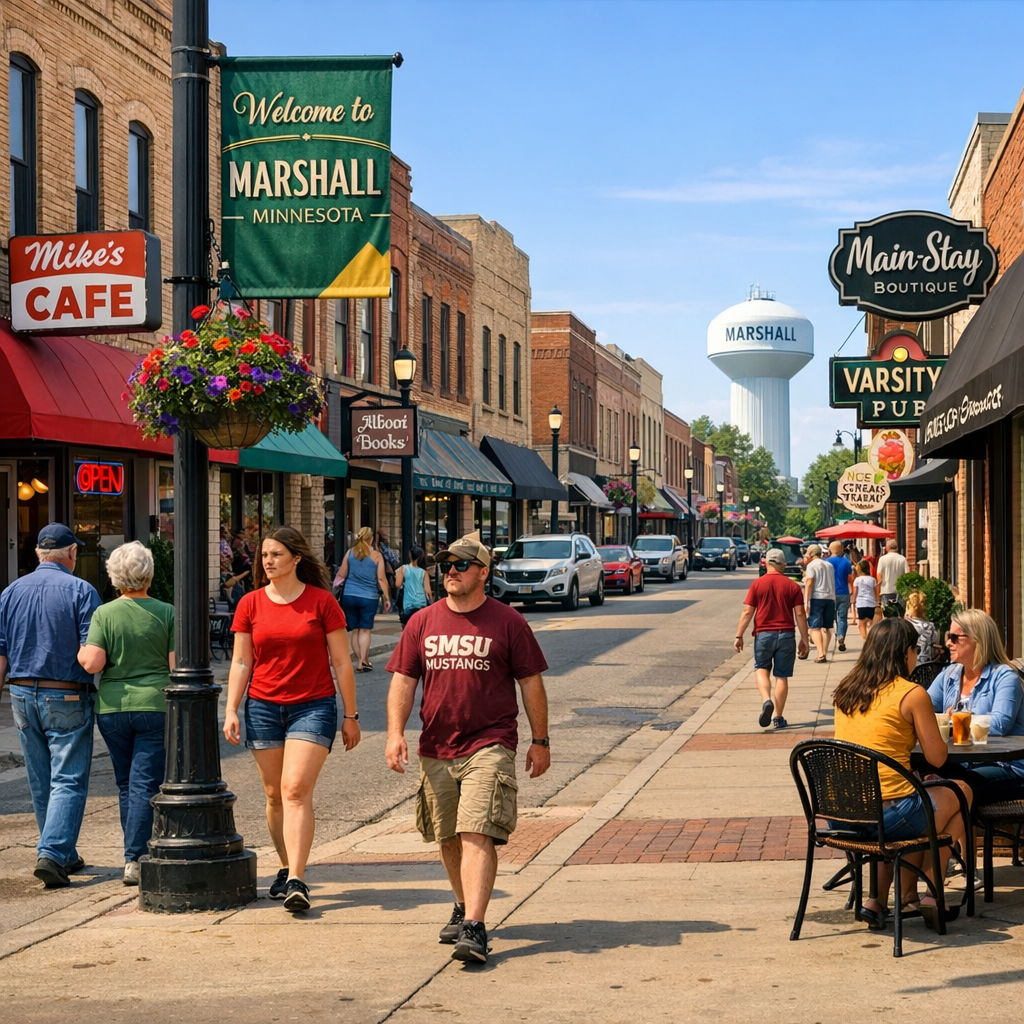
Marshall, Minnesota, serves as a vibrant economic hub in Lyon County, offering a unique blend of business opportunities, housing developments, and demographic diversity. This article provides an in-depth look at the city’s economic landscape, highlighting key trends and insights.
Business Environment
Marshall’s strategic position has fostered a robust business community. The city boasts over 750 retail, wholesale, and professional firms, alongside more than 40 industrial companies, some with international reach. This diverse business ecosystem underscores Marshall’s role as a regional economic center.
Notably, the city’s pull factor—a metric indicating retail spending relative to population—stands at 1.66. This suggests that Marshall attracts significantly more business activity than its residential population of approximately 13,906 would imply. The daytime population swells to around 25,000, reflecting the city’s appeal to neighboring communities and commuters.
Housing Market
The housing sector in Marshall has experienced notable growth. As of March 2026, the median sale price of homes reached $223,000, marking a 19% increase from the previous year. The median price per square foot rose to $117, up 18.2% year-over-year. Homes typically sell after 43 days on the market, indicating a competitive housing environment.
Rental properties have also seen changes. As of May 2026, the average rent for a one-bedroom apartment is $1,063, reflecting a 9% increase over the past year. This trend highlights the growing demand for housing in the area.
Demographic Insights
Marshall’s population is projected to reach 14,069 by 2026, with a median age of 35.9 years. The racial and ethnic composition includes 78.2% White, 6.5% Hispanic, and 6.2% Asian residents. The median household income stands at $68,566, with 14.1% of families living in poverty. These demographics provide a snapshot of the community’s diversity and economic standing.
Recent Business Developments
The local business scene has witnessed significant changes. In April 2025, Patzer’s Hardware Hank, a staple in downtown Marshall since 1969, began liquidating its hardware, appliance, and furniture divisions. Co-owner Lyle Patzer cited plans to relocate closer to family as the primary reason. However, the Patzer family continues to operate in the outdoor power equipment and small engine service sectors, maintaining a presence in the community.
In another development, Yelloh, formerly known as Schwan’s home delivery, announced plans to cease operations by the end of 2026. Founded in Marshall in 1952, the company cited changing customer lifestyles and economic challenges as factors leading to this decision. This closure marks the end of a longstanding local business, impacting both employees and customers.
Conclusion
Marshall’s economic landscape is characterized by a dynamic business environment, a competitive housing market, and a diverse population. While the city faces challenges, such as business closures, its role as a regional hub and its economic resilience continue to drive growth and attract new opportunities.